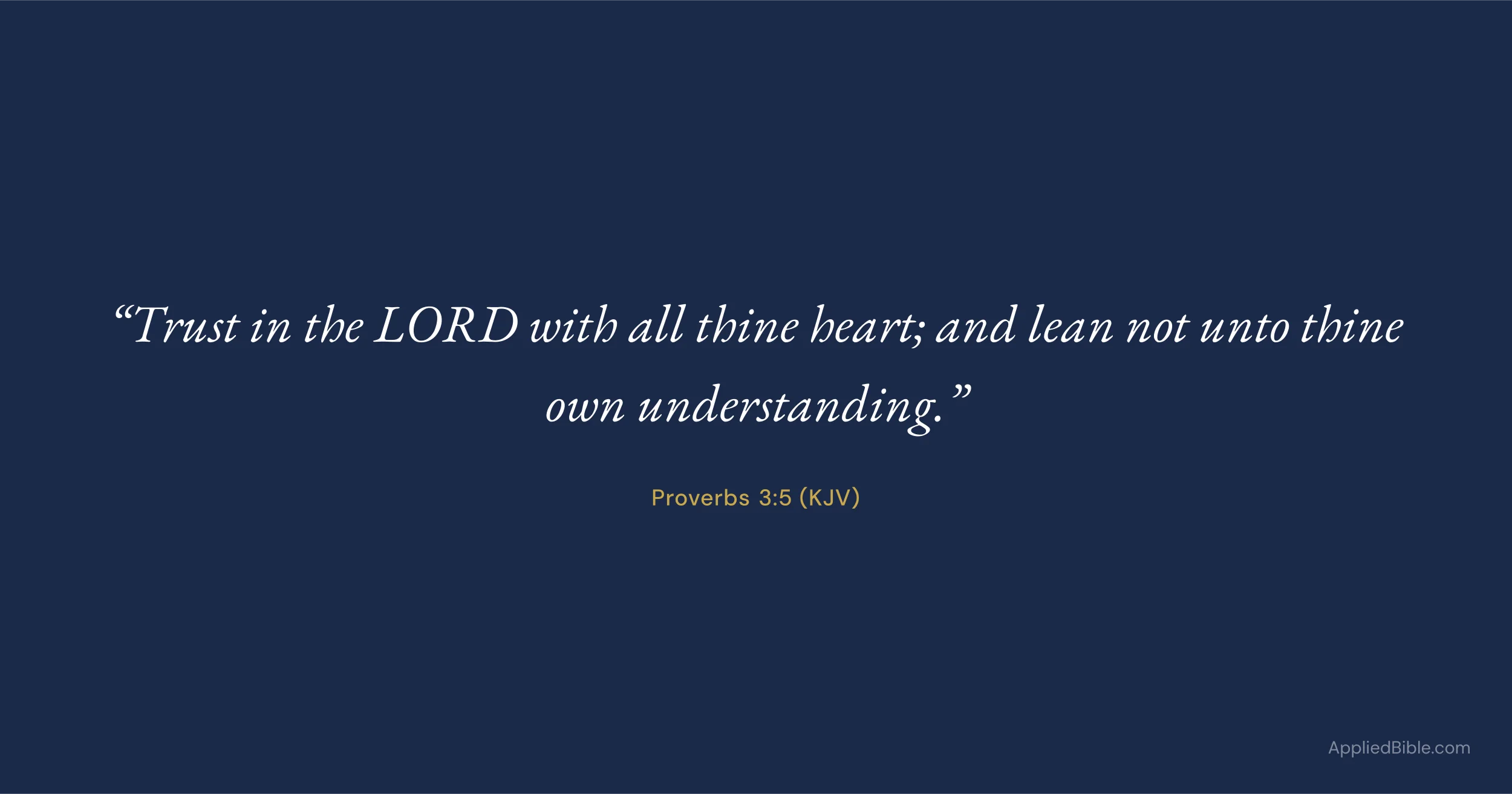
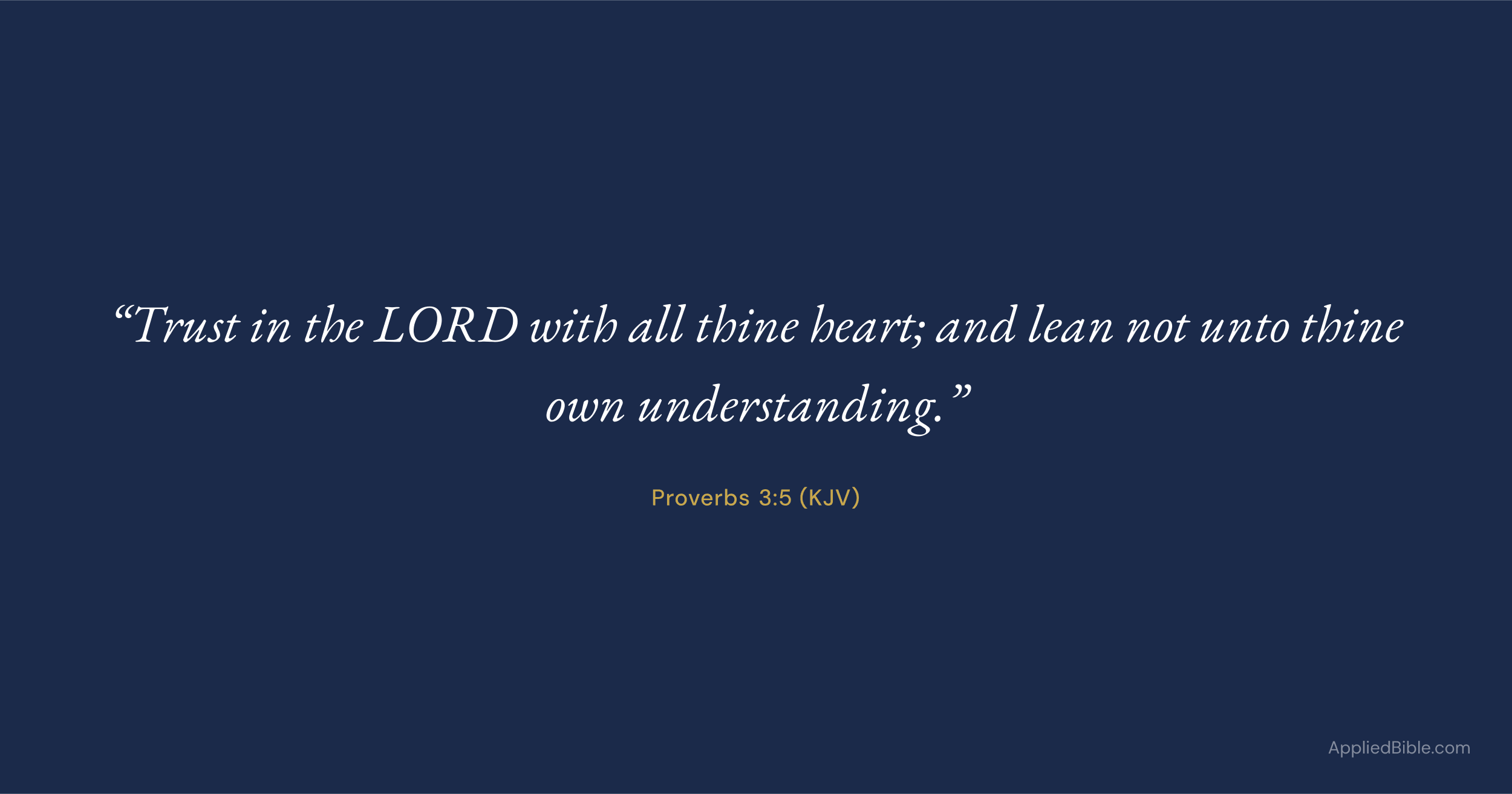
“Trust in the LORD with all thine heart; and lean not unto thine own understanding.”
Proverbs 3:5 (KJV) |
Trust God completely, even when you cannot see the full picture.
Proverbs 3:5: What It Means and How to Apply It
Where This Verse Comes From
Solomon wrote this verse as part of a father's instruction to his son. The Book of Proverbs opens with Solomon passing down hard-won wisdom to the next generation, and chapter 3 is packed with paired commands: do this, and here is what happens. Trust God completely, and He will guide your steps.
The verses around Proverbs 3:5 follow a clear pattern. Verses 1-4 tell the reader to hold onto God's teaching because it leads to favor and a good reputation. Verses 5-6 are the centerpiece: trust God, acknowledge Him, and He will direct your path. Verses 7-10 continue with instructions to fear God and honor Him with your finances. Each pair gives a command and a promise.
What Does Proverbs 3:5 Mean?
What does "trust" really mean here?
The Hebrew word for "trust" here is batach, and it carries a sense of feeling safe, of resting your full weight on something. It is not a polite nod toward God. It is the kind of trust where you lean in with everything you have, the way you lean back in a chair without checking first whether it will hold you.
What does "lean not on your own understanding" mean?
It means your perspective has limits. You see a fraction of the picture. God sees all of it. When your best reasoning and God's leading point in different directions, follow God. This does not mean God wants you to stop thinking. Proverbs is an entire book about seeking wisdom, asking questions, and learning discernment. What Solomon is saying is this: do the hard work of thinking, but let God have the final word.
Why does it say "LORD" in all capitals?
The "LORD" in all capitals in the KJV signals the personal name of God, YHWH. This is not generic advice about trusting the universe. It is specific: trust the God who knows you by name, who made promises to you, and who has a track record of keeping them.
Is this verse saying you should not think for yourself?
No. God created you with a mind and expects you to use it. Proverbs itself is a book about gaining wisdom and discernment. The verse is about where you place your ultimate trust. Think carefully, seek wise counsel, study Scripture, but let God have the final word over your plans.
How to Apply Proverbs 3:5 to Your Life
When you are facing a decision and do not know what to do
Maybe it is a career crossroad, a relationship that needs a hard conversation, or a medical decision with no clear right answer. Your instinct is to research, make lists, and poll everyone you know. Those are good tools. But before you make your final call, bring it to God. Ask Him to lead. Then pay attention to how He responds through Scripture, through wise counsel, and through the peace (or lack of it) in your spirit.
When anxiety is trying to run the show
Worry is what happens when you lean hard on your own understanding. You replay the worst-case scenarios because you are trying to prepare for every outcome by yourself. Proverbs 3:5 is the antidote: shift the weight off your shoulders and onto God's. You do not have to figure out how everything will work out. That is His job. Yours is to trust Him while He does it.
When other people's advice contradicts what you sense God is saying
Good friends give good advice. But sometimes the wisest people in your life will tell you one thing while God's Spirit is nudging you in a different direction. This verse gives you permission to follow God even when it does not make sense to the people around you. "All thine heart" means all of it, not the part left over after everyone else has weighed in.
Try This Today
- ✓ Pick one decision you are facing today, big or small.
- ✓ Before you weigh the pros and cons, pause and ask God to lead.
- ✓ Write down what you sense Him saying, then take one step in that direction before the day is over.
Related Verses
"In all thy ways acknowledge him, and he shall direct thy paths."
The companion verse completes the thought: trust God, then acknowledge Him in everything you do, and He will guide you.
"Commit thy way unto the LORD; trust also in him; and he shall bring it to pass."
David echoes the same idea: hand your plans to God, trust Him with the outcome, and watch Him work.
"Blessed is the man that trusteth in the LORD, and whose hope the LORD is."
Jeremiah describes the blessing that comes to those who place their trust in God rather than in human strength.
"Thou wilt keep him in perfect peace, whose mind is stayed on thee: because he trusteth in thee."
Isaiah connects trust with peace. When your mind is fixed on God instead of your circumstances, peace follows.
"And we know that all things work together for good to them that love God, to them who are the called according to his purpose."
Paul gives the New Testament reason to trust: God is working everything together for your good, even what you cannot understand.